
SECOND HAND SAVIOR | WEEK 1
"Second Guessing God"
Pastor Rory
Most of us know what it’s like to receive hand-me-downs.
Sometimes they’re useful. Sometimes they don’t fit. Either way, you didn’t choose them — but they become yours.
Beliefs can work the same way.
Many of us inherited our view of God. Maybe it came from a church culture that felt exclusive. Maybe from a parent who claimed faith but didn’t live it. Maybe from unanswered prayers, hypocrisy, or religion that felt like rules without relationship.
When faith is secondhand, it’s fragile. We live on borrowed convictions and then wonder why we struggle to hold onto them.
A.W. Tozer said what we believe about God is the most important thing about us. If we believe God is distant, we drift. If we believe He’s angry, we live in fear. If we believe He’s disappointed, we live in shame. If we believe He exists only to affirm us, we never change.
What if the God you struggle to serve isn’t God at all — but a version someone handed you?
Distance Distorts
In Exodus, Israel witnessed undeniable miracles: plagues, the Red Sea, manna in the wilderness. Yet they still didn’t truly know God.
Why? Because they kept their distance.
When God invited them to the mountain (Exodus 20), they stepped back in fear and told Moses to speak on their behalf. Moses had proximity. They did not.
And distance distorted everything.
When they faced hardship, they assumed God was against them. Deliverance felt like danger. Salvation felt like struggle.
Many of our spiritual struggles aren’t about God’s power — they’re about our perception of His character. It’s hard to trust a God you don’t know personally.
Manufactured Gods
When Moses stayed on the mountain forty days, the people built a golden calf (Exodus 32). It was familiar, manageable, and convenient.
The gods we manufacture always are.
They share our opinions. They never confront our sin. They don’t demand growth or obedience.
Aaron even called the idol a “festival to the LORD.” They put God’s name on something He never authorized.
At the bottom of the mountain, they built a substitute.
At the top, God was designing a meeting place.
One was secondhand religion. The other was personal encounter.
God Speaks
In Exodus 34, God speaks for Himself:
“The LORD, the LORD, the compassionate and gracious God, slow to anger, abounding in love and faithfulness.”
Not a system. Not a ritual. A name. A character.
God refused to let others define Him. His desire has always been firsthand relationship — not inherited religion.
You can know church and not know God.
You can know doctrine and never meet the Father.
From Sinai to the Cross, God’s project has been the same: remove the barriers and invite us closer.
So how do you move from Second Hand Savior to firsthand faith?
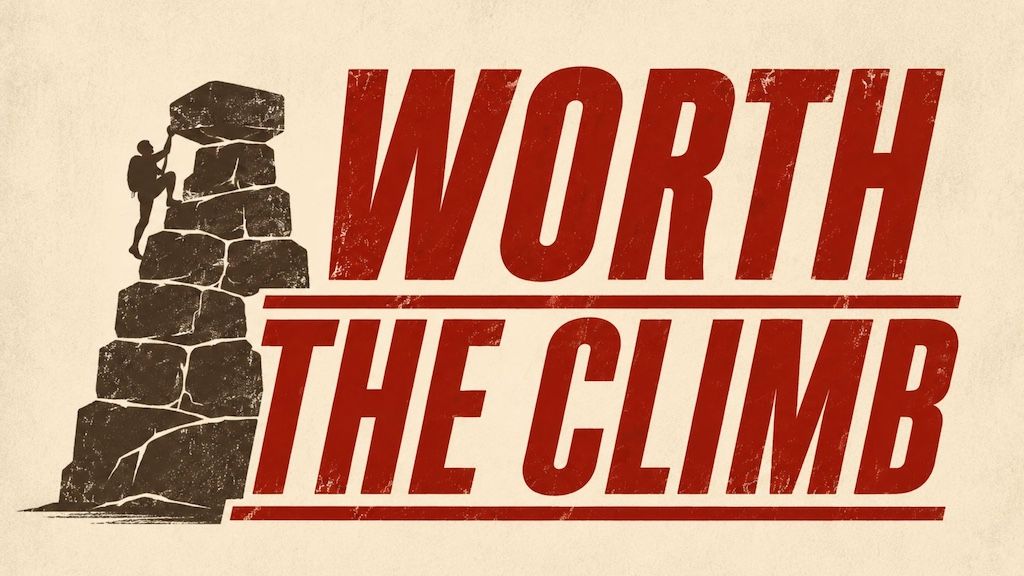
Make the climb.
Climb over disappointment.
Climb over hurt.
Climb over the version of God someone handed you.
Distance distorts.
Hearts manufacture substitutes.
But God still speaks — and He still invites you to come closer.